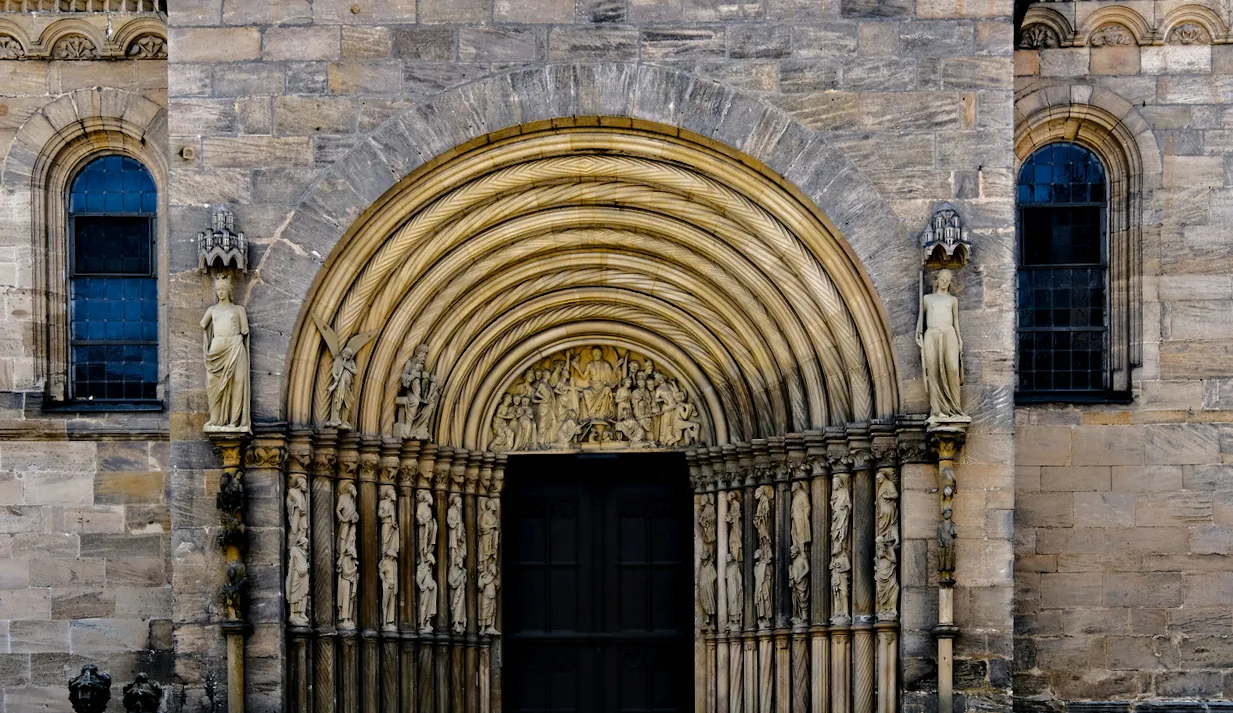
The Prince's Portal at Bamberg Cathedral is among the most compelling sculptural ensembles of the High Middle Ages. As a richly articulated entrance zone-with a layered tympanum and varied figure rows-it marks the threshold from the public square to the sacred interior, condensing core themes of medieval devotion. The linked cathedral page, research dossier and local guide provide grounded introductions to its making, layout and readings. [1][2][3][4]
Highlights
- Last Judgement in the tympanum: Christ as judge forms the iconographic core; surrounding zones set heaven and earth in tense dialogue between judgement and promise. The linked pages walk through the parts of the scene. [1][2][3]
- Wise & Foolish Virgins: The portal integrates this well‑known parable, adding moral reflection to the judgement theme. [1][3]
- Expressive figure rows: Drapery, stance and gaze demonstrate the workshop's quality; read the arrangement gradually-from outside to inside, bottom to top. [1][3][4]
- Urban threshold: As a threshold architecture, the portal engages the square: light and relief shift with time of day, revealing new details. [2][4]
Context & history
Made within the cathedral's 13th‑century phase of building and sculpture, the portal reflects broader trends-vertical emphasis, expanded saint and narrative cycles, and layered iconographic programs-interpreted in Bamberg with a distinct hand. Scholarly texts discuss dating, workshop ties and stylistic placement. [1][3]
How to read the iconography
- Take it in whole: Note framing, jambs, archivolts and tympanum-how the image field opens to the square yet gestures inward. [2][4]
- Locate Christ in Majesty: Then follow adjacent groups-angels and gathered or rejected figures responding to judgement. [1][2]
- Scan the arch program: Virgins and further actors teach and admonish; look for attributes and directed gazes structuring relations. [1][3]
- Move through the jamb figures: Observe posture and drapery; a slow pass reveals the portal's narrative band. [1][3][4]
Visiting tips
- Access: The portal forms part of Bamberg Cathedral; check the cathedral site for current access notes. [2]
- Background reading: The University of Bamberg PDF offers an in‑depth dossier. [3]
- Tours: City and cathedral tours often include the portal. [4]
- Respect: This is an active place of worship-please be considerate, especially during services. [2]
Nearby
About this page: editorial overview based only on the linked sources. Last reviewed: 2025-11-04.